Tree Lined and Very French

Driving around France you are always on straight roads that are lined and shaded by plane trees. But who planted all the trees in France, and why?

We have heard a lot of answers that are all wrong. The Romans did it along their straight roads – no, those trees would be dead and today’s roads are not Roman. Napoleon did it to shade the movement of troops – no, most of the trees were planted before Napoleon and he would have had to wait 50 years for the trees to shade his troops. The land owners did it for decoration – no, the land owners would not have spent their money other than on their land.

When Louis XV came to the throne the roads of France were in a terrible state and the finance minister (Orry) was put in charge of fixing things to speed commerce and travel. He created a “corvée des chemins” – a road duty/chore/obligation – that forced everyone to build and maintain roads. The major roads were specified to be 19.5 meters wide with a drainage trench each side and lined … you guessed it … with trees. Looking at the specification, it was 84 feet or 27 meters from tree to tree.

The French can do infrastructure and by the end of the reign there were 25,000 Km of roads and the travel time from (say) Paris to Orleans dropped from 2.5 days to one day – the 18thC equivalent of the TGV.

Today, opinions vary about whether to keep the trees. Some say they are dangerous – one in eight road deaths are from hitting a tree – but others argue they the closeness of the trees gives a greater impression of speed and slows people down. If you run off the road, you are going to hit something … so who knows.

The discussion my be irrelevant because the plane trees are now being decimated by the spread of a fungus and millions in research have not found a cure for the iconic trees.

The stretch of road in the photo is from St. Remy de Provence to Eygalières where some vandal decided the trees would look better with the National Front painted on.

Pyrenees

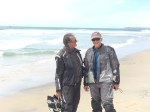
Here’s an idea ….  let’s take a motorbike with bonkers horsepower and charge around a couple of thousand kilometers of the most spectacular roads in the French and Spanish Pyrenees and sample some of the local food and wine with a mate I’ve known since I was 4 years old. Yes, I could do that.

The Border: Three Problems. No Strategy.

Just slogans for Fox News and worse to come.

We just completed a 2700 mile ride from the Gulf to the Pacific following the US-Mexico border as closely as legally possible. We met people from across the political spectrum including ranchers, environmentalists, park rangers, border patrol, law enforcement, activists, and a bunch of other people living in the borderlands.

A thee week jaunt doesn’t make me an expert but we did deliberately seek out diverse opinions and listen to people’s experiences. Take these comments in that context.

So .. there are three overlapping problems at the border and (spoiler alert) a wall will not fix any of them but will create a whole set of new problems.

Men Seeking Work

Since the border was created 180 years ago, there has been a steady flow of workers from the south coming to work in the US. They arrive, work, pay their taxes, contribute to the local economy, send money home or go home. There are jobs that US workers do not want to do in our fields and factories and construction sites. Even migrants’ children who speak English and have an education do not want to pick radishes or gut chickens. There has always been a demand, and there will always be a supply. It is idiotic to claim that they are taking Americans’ jobs and it is even more stupid to spend billions on a wall or spend millions of dollars on border patrol resources and prisons to intercept and deport workers that America needs. A wall will not stop this flow when people can climb, fly, or tunnel.

If there was a sensible worker visa program, this problem would simply go away. This would free resources for other uses, stop migrants dying in the Sonoran desert or at the hands of coyotes, and move money from the hands of criminal smugglers into the hands of US communities.

Families Seeking Asylum

The countries to the south of Mexico – Guatamala, El Salvador, Nicaragua – are failed states. Climate change has decimated their agriculture – especially coffee – and gangs and drugs have decimated their civil society. Families are leaving in desperation to save themselves and their children. They would rather risk losing their children through separation in the US than lose them to gang violence at home. This is like osmotic pressure on the border and it is only going to increase unless the US helps fix these countries. There could be another million on their way but these migrants are turning themselves in legally at the major border ports of entry in the hope of finding a better life – despite Pres.Trump’s increasing cruelty and desperation to make them disappear. A wall will make no difference to this.

Drugs Seeking Markets

NAFTA expanded trade with Mexico and truck traffic increased 5x across the border providing lots of places to hide drugs. At the same time, NAFTA enabled cheap American corn and wheat to put Mexican farmers out of business.Throw in the opioid epidemic that is ramping demand for Mexican heroin and you have a perfect storm. Cartels have shifted their delivery routes from the Caribbean to Mexico and have found lots of unemployed Mexicans to grow new profitable crops and work as foot soldiers in the drug war. Drugs mainly come in through ports of entry but still also come across the open desert and, in neither case, will a “beautiful wall” make a bit of difference. Again, there is a huge demand that will be satisfied one way or another. If we stopped wasting resources on catching and jailing migrants, we’d have more resources to spend on the real problem of drugs. Many times we heard from border patrol that they are being diverted to process asylum paperwork instead of going after bad guys,

There are also three problems that we OUGHT to be dealing with but that we are ignoring when we are distracted by the Trump miasma of bullshit.

Healthcare Caravan

When staying in Columbus, NM we went over the border to Palomas for dinner. This is a tiny hamlet but has four dental offices and as many pharmacies catering to Americans looking for affordable healthcare. In Los Algodones across from Yuma, AZ there are over 300 dental offices and, in the peak winter season, over 6,000 Americans cross every day to see a Mexican dentist. The town is informally called “Molar City”. We don’t have caravans of latinos invading America, we have caravans of Americans invading Mexico for healthcare. This is a natural market response to the US healthcare nightmare but is a disgrace being hidden by the distractions.

Ecological Disaster

Any wall can be breached by humans but that is not the same for wildlife. When we met with a group of ranchers in the Sky Islands area of Arizona and New Mexico, they described their region between the Rockies and the Sierra Madre as one of the most diverse ecosystems in North America. They depend on the health of this area for their ranching livelihood, they have been looking after it for generations, and are upset that a wall will do permanent damage to wildlife corridors and the health of this land. Along the Rio Grande Valley the story is the same; a wall along the river will cutoff wildlife and ranches from the river and destroy the diversity and beauty of this wild place.  We talked to a lot of deeply conservative people who were dead set against a wall.

Border Industrial Complex

There’s money to be made in borders and walls – construction with little oversight, technology for surveillance by contractors, prisons and transport for apprehended migrants, equipment and arms and trucks and service and housing and management. These are all multi-billion dollar businesses with lobbyists and committee chairmen and good old boys all over the establishment, This is becoming entrenched, self-perpetuating, and fundamentally corrupt.

Meeting People at the Fence

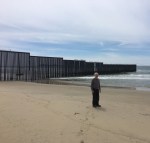
The final stop on the US-Mexico border is where the fence reaches out into the Pacific between the Tijuana River estuary and the sprawl of Tijuana. There is the International Friendship Park and the final Border Monument where people from both sides can hold hands.

Well theoretically. Today there were two barriers to our getting to the final monument and the fence on the beach.

The Tijuana River running into the US from Mexico has long been the source of contention – especially when it pollutes the surfing at Imperial Beach. But after unusually heavy rain, it has overflowed sludge with sewage and chemical runoff  blocking the access road to the park. We asked Border Patrol if we could get past and were told “Well you can try but, if you go down, you will NOT be happy”. After watching a CBP truck up to its axles in shit, we decided not to try.

So we rode onwards directly to the beach to walk up the fence but when we got there and came close, the border patrol made it very clear we were not allowed to approach the fence AT ALL. This used to be possible but is not allowed now. No touching. No talking. Like a prison visit on both sides.The border monument is also inaccessible because of a second line of fencing and razor wire across the whole area. A depressing prospect of paranoia from all angles.

But one door closes and another one opens. As we contemplated the road blockage, we started to chat to a gentleman riding his bicycle and enjoying his retirement. We ended up having a delightful discussion about our journey along the border with Dr. Refugio Rochin, Professor Emeritus of Chicana/o Studies and Agricultural Economics at the University of California and formerly on the editorial board of the Journal of Borderlands Studies. We should have consulted with Professor Rochin BEFORE we made this trip.
Thank you Dr. Rochin for being so generous with your time and insights on what is happening today at the border and for providing a perfect ending to our ride.

We have much more to learn.

For more about Dr. Rochin – https://www.aeaweb.org/about-aea/committees/csmgep/profiles/refugio-rochin-rodriguez

The Border Industrial Congressional Complex in Action

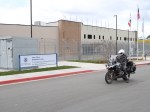
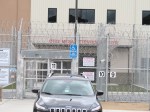
In the industrial sprawl on the east side of San Diego within sight of the US-Mexico border is the Otay Mesa Detention Center. Surrounded by huge logistics and warehouse operations is this highly secure razor-wired warehouse for people. If you ere detained at the border by CBP or swept up by ICE for deportation – you end up here.

It has all the outward appearance of a government building with the appropriate flags flying and the sign that says it belongs to the US Department of Homeland Security San Diego Field Office but it is operated by a contractor – Core Civic of Tennessee LLC.

Sounds harmless and noble but Core Civic used to be called Corrections Corporation of America before they rebranded themselves to expand beyond their core business – private prisons. This is a $1.8B corporation that has been in business since 1983 – their web site says they are “America’s leader in partnership corrections. We provide solutions that combine public sector oversight with private sector efficiency.”  

If you believe any of that, you have not been paying attention. The three major private prison companies in the US have been very busy lobbying at federal level and, more importantly, at the state level through the pernicious American Legislative Exchange Council (ALEC), for all sorts of changes to grow their businesses – longer sentences, “three strikes”, and even for the creation of new crimes. Prisons lobbying for new crimes. How is that even possible?

The border is just another line of business opportunity that they are happy to support and work to grow. It is estimated that there are over 50,000 migrants or deportees in over a hundred facilities maintained for ICE or CBP – that amounts to about $10M per DAY revenue for private contractors. This one in Otay Mesa has five units and they are adding two more.

The border business is booming – expect these companies to play a significant role.

Presidential Solutions – Then and Now

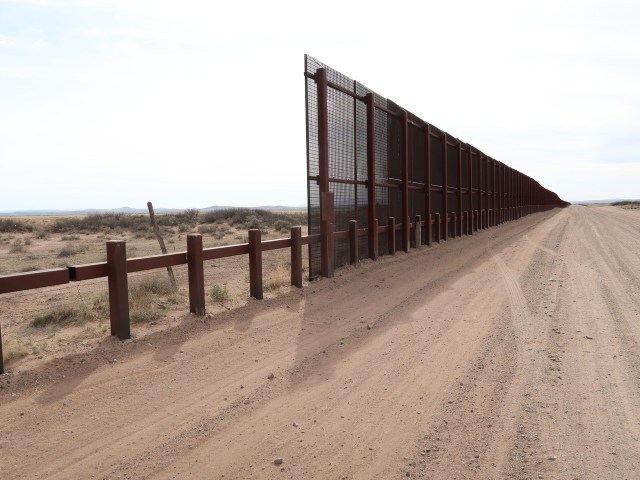
Whenever you visit the border anywhere from San Diego to El Paso, the border fence or wall is located exactly at the border line and is backed up by a wide and well maintained laser straight road. This road is called the Roosevelt Reservation after an executive action taken by Pres. Teddy Roosevelt in 1907 to combat smuggling in which he simply declared that the first 60 feet of America along the border belonged to the federal government. No act of Congress, no compensation, just his declaration. Maybe nobody noticed or even cared in 1907 what happened to a 60 foot strip across the desert.

Though the intention was to prevent smuggling by preventing any buildings being constructed right up to the border then, as now, it made absolutely no difference to the smuggling of booze or other contraband.

Fast forward a century and we now have vehicle fences, pedestrian fences, or walls topped with razor wire right along the border with Border Patrol posted inside to prevent smuggling or illegal entry. Now, as then, it’s not preventing migration or smuggling.

There is a demand from American companies and farms for physical labour and a demand from American consumers for illicit drugs. As long as those demands exist, smart people will find ways to profit from them.  

Neither a wall nor a wide road are going to stop them.

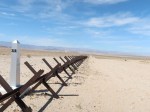
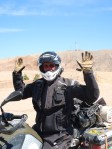
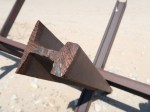
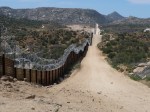
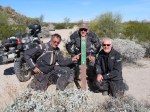
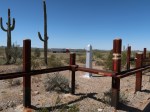
Photos from the border between Calexico and Jucumba Springs in Southern California.  Border fence from Border Monument 225 to where the road just dead-ended into the mountains – Evan being apprehended with border surveillance station behind him – vehicle fence made from welded Victorian era rails stamped 1903 – Wall made from Vietnam era landing pads with newly added razor wire and Border Patrol agents in their vehicles under an awning every mile or so.

Humanitarian Aid – It’s Complicated

El Camino del Diablo – the Devil’s Highway – is a dirt road crossing the Sonoran Desert that was originally a Native American footpath but later used by conquistadors, missionaries and miners before the railroad to Yuma was opened in 1870. It is still a very sandy and very difficult road. Essentially unchanged for the last 1000 years.

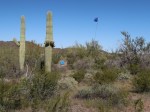
Today it crosses three federal lands – the Organ Pipe Cactus National Monument, the Cabeza Prieta Nature Reserve, and the Barry Goldwater Air Force Range – and you need a permit to travel across it. It is a beautiful and challenging two day adventure in spectacular country.

This area is also one of the most high traffic drug and people smuggling routes on the border. Across the vehicle fence, Mexico’s Highway 2 makes a perfect delivery point for migrants and smugglers.

Before the vehicle barrier was installed, drug smugglers would load a truck and crash north off Highway 2 through the desert to Ajo or other north-south routes. The vehicle fence put a stop to that (but still allows wildlife to cross) along with checkpoints far enough north. We met and talked to many Border Patrol and Federal Wildlife officers who have been sent here from all over the country and who scour this area regularly. The whole area is under heavy surveillance with mobile camera towers and magnetic and seismic sensors in the roads.

Though the number of Mexican migrants crossing here in search of work has declined over the years, the humanitarian challenges are still significant. Crossing this desert area is a dangerous proposition and over 3000 people have died here in the last ten years.

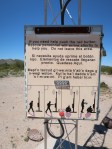
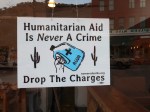
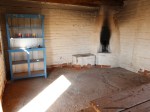
We rode through the Ajo Mountain area that recently had the first real rain in ten years and was exploding with beauty but even here there were water stations installed with permission from government and private land owners by Humane Borders – marked with flags and not providing plastic bottles that get dropped as garbage. In the Cabeza Prieta, activists who preferred not to deal with the federal owners, were recently prosecuted for trespass. In many places across the area, there are towers setup to allow migrants to turn themselves in and be rescued. At Tule Well there is a 30 year old casita where visitors have left food and messages of encouragement.

Talking to federal law enforcement, however, the concern is that well meaning assistance in the wrong places merely allows poorly prepared migrants to get further from help and just die further up the road and many then get into the bombing range with obvious additional dangers for them and their pursuers or helpers.  

The humanitarian situation is complicated. The pressure for people to move is increasing and the human cost will only be reduced when there is a sensible worker visa program that allows people to cross legally. This will stop people dying and allow Border Patrol to focus on the drug problem.  

– A great book on this area and the forces that drive people to continue to cross, read The Devil’s Highway: A True Story by Luis Alberto Urrea.  

– For more on the humanitarian efforts go to https://humaneborders.org/)

Border Control – Then and Now

Good neighbours make good fences,

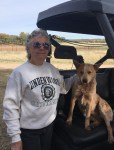
Maureen De La Ossa was raised on the border in Lochiel, Arizona; once a busy border crossing for trade and workers going back and forth between two agricultural communities, but for years it’s been a closed dead-end that leads to the border fence east of Nogales. Maureen went to first grade at the one room schoolhouse and has lived here all her life.

Maureen’s father was a border rider; paid to patrol the border on horseback in country he knew well, to prevent any cattle infected with hoof and mouth disease coming over from Mexico to infect American herds. It worked then and there are parallels today.

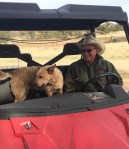
Maureen’s neighbor, rancher Mark Butler, suggested “Hey, pay a cowboy $3000 a month and feed his horse and he’d be happy to get the job done for a tenth of what Border Control costs”. Not a bad suggestion. We’ve heard people complain “There’ll soon be enough border patrol agents to hold hands along the damn border”. (Fact Check: There are about 20,000 agents plus the troops dispatched by Pres. Trump – so let’s say enough for 1% of the border if they all held hands)

We have spoken to a lot of people who are not very happy with the job that Customs and Border Patrol are doing. There are various complaints – the CBP agents are not from the area, don’t live in or contribute to the community, and are often reallocated just when they know their way around – union rules restrict their hours and places of work and limit them getting in harms way, which is not very effective when dealing with dangerous people – the agents spend a lot of their time sitting in their air-conditioned cars at strategic places far away from the border itself because they get credit for catching people and not for stopping them crossing in the first place.

In addition to an increase in people, the deployment of surveillance technology is visible all over the place. Here are two of them …

– there is a series of a dozen surveillance towers between the Coronado National Memorial and Nogales that appear to have optical and thermal sensors and are connected to a dark room full of contractors somewhere 

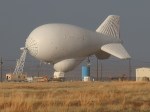
– both in Arizona and West Texas there are radar and other cameras and sensors being hauled aloft on tethered balloons. 

In addition, every one of our vehicles and every one of our faces is photographed each time we travel through any one of the CBP checkpoints setup 50 miles or more from the border. The CBP has significant legal powers within 100 miles of the border that would be unconstitutional and outrageous elsewhere in the US and they are backed up with a huge technology investment. 

The Border Industrial Congressional Complex in action.

But maybe putting a few agents on horses would be cheaper and more effective. Good neighbours make good fences.

Real Life in the Borderlands

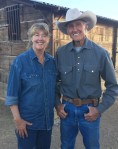
Warner Glenn started the Malpai Borderlands Group twenty five years ago to bring together his fellow ranchers and land owners in Southern Arizona and the Bootheel of New Mexico and to improve communications with the various government agencies where relations were historically tense or completely broken.

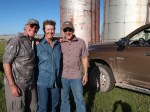
Through Chris Van Dyke’s contacts in the outdoor and conservation worlds, we were  invited to meet this group at their annual meeting that was held at the Malpai Ranch outside Douglas, Arizona that has been in the Glenn family for six generations. This meeting was a role mode for the kind of civic engagement that ought to be happening all across America but appears sadly lacking – the Glenns and their neighbors in two states, representatives from state government, BLM, National Forest Service, The Nature Conservancy, and other interested conservation groups all discussing issues of mutual interest with respect and constructive intent.

The Customs and Border Patrol chief from the Douglas area gave an update. We learned that apprehensions were few in this area (migrants and drug movements at an all time low) but that they were dealing with an overflow from El Paso where asylum-seeking families are turning themselves in to authorities in groups of several hundred at a time. The local CBP team in this area has been reduced from 600 to 400 as a result but they do have additional technology and people from military deployments to the border – the National Guard are not very useful but the regular army Military Police are appreciated. We also heard that they had entered into the planning stages for a 30 foot wall across this area and into New Mexico but the national focus was on Texas where the process could get bogged down in a huge humber of complex land ownership issues and lawsuits. Maybe the wall won’t happen here for years.

Maybe.

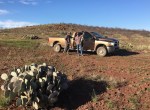
After the meeting, Kelly Kimbro, Warner’s daughter, took us for a short tour of the ranch where they keep a few hundred head of cattle and hunt mountain lions. While she took care of the well pump we had a wide-ranging frank discussion on the issues of the day. Kelly has welcomed politicians of all persuasions and is not shy in expressing her views. We asked Kelly and others at the meeting if they thought a wall was a solution to any problems on the border and they all responded with a resounding NO – “I don’t care what you build, people are still going to come through” and  “anyone with the border as their property line wants a vehicle barrier and technology to help Border Patrol to do their job”. “Boy, I’d love to get Donald Trump into this truck to talk to him”.

A lot of people around here have put millions of dollars and decades of work into conservation with partners on both sides of the aisle and both sides of the border. The Sky Islands country is one of the most diverse habitats in America; a series of high valleys and mountains between the Rockies and the Sierra Madre where people have been limiting development to preserve its uniqueness. A wall through here would ruin all their efforts. An ecological disaster in the making.

Everyone we met today was extraordinarily generous with their time and willingness to answer questions and engage a group of strangers who showed up on motorcycles.

This is America how it should be.

Photos: Warner Glenn and his daughter Kelly Kimbro – driving across the ranch to manage the well pump and cattle trough – family museum with equipment and artifacts from generations of life on the ranch

Fun Then Tragedy at the Border

Exploring the so-called Bootheel of New Mexico we found Border Monument Number 40 erected at the point where the border takes a 90 degree turn and heads south. Further east we had seen miles and miles of “Normandy Fence” that is designed to stop vehicle movement but here there was no type of barrier at all except barbed wire.

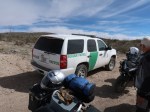
As we rolled up so did a Border Patrol truck. The agent stepped out to chat and shook hands and introduced himself.

Colin: So what’s the difference between the CBP guys in green uniforms like yours and those in blue?

CBP:  We are in the field and the agents in blue are at the ports of entry checking people and trucks.

Evan: So which of you guys is the coolest? (Laughing) 

CBP: (Smiles) Well I get to be here outdoors and those guys get to breath diesel fumes all day.

Colin: So are you keeping busy out here? Lot of people crossing?

CBP: Sure – I got a load of ‘em in the truck. 

Evan: (Without hesitation) Can we interview them?

CBP: NEGATIVE: Good day gentlemen. (Drove off)

As he passed we saw two women and two kids caged in the back of the truck. We have no idea where they would be taken – probably the CBP facility in Deming, NM. There were two more CBP trucks approaching from the south with more migrants in custody.

Most of the apprehensions these days are families escaping the violence in Central America not men looking for work.