The Mimosa – The Welsh Mayflower
Somewhere my Evans ancestry goes back to Wales so maybe I am related to the Welsh community here in Argentina.
The Welsh in Argentina? What? How did that happen?
In the early 1800s the coal, slate, iron, and steel from Wales were fueling the industrial revolution and many thought that the rural life and the Welsh language and culture were in danger of being absorbed and smothered by England. So, looking for places to continue their traditions, may Welsh people took off to other parts of the world. They tried New York and Pennsylvania but the forces of absorption there were too strong.
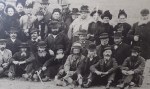
In the 1861, the Argentinean government gave them a tract of land in Patagonia and 200 souls departed Liverpool for Argentina about the tea clipper Mimosa – the Welsh Mayflower escaping the English influence on their language, faith, and culture like the Pilgrims before them. The photo of the passengers on this trip shows them as a dour and determined group, well past their youth; not a lot of laughs on this voyage.
They originally settled on the coast and learned to tame the unforgiving pampas with irrigation but the community eventually spread all the way west to the Andes. Here in Trevelin, John Evans built a town based on wheat and flour milling until Juan Peron decided the area was not appropriate for wheat and shifted farming to cattle ranching – I suppose dictators can do that.
Earlier, the influence of the Welsh was significant enough that, in 1902 along with the indigenous Mapuche, they managed to insist on a change to the Chile-Argentina border to prevent their community being split between two countries.
Today there are perhaps 50,000 Welsh speakers here in Chubut Province and they hold four annual Eisteddfod festivals which are Gaelic gatherings for dance, music, and poetry in the Welsh language.
It is hard to reconcile the photo of the Mimosa passengers with a group of people whose motivation was to escape the English in order to be able to dress as druids to sing, dance, and recite poetry.
 Colin's Travel Journal