
Not All Of The Adventure Was Part Of The Plan.
Expedition65 took a year and half to plan and nothing was left to chance; all our bikes were serviced, spares were carefully selected and packed. the route and points of interest were meticulously researched, logistics double checked, critical reservations made, and fuel and tires cached along the continent.
So it all worked perfectly? Right? WRONG. Despite anyone’s best efforts, no battle plan survives the first contact with the enemy and problems come from the most unexpected places.
These are just a few of the lessons learned from things that did not turn out quite as planned.
Filming
We were all delighted to have Sterling Noren join Expedition65 as our embedded film maker. Sterling is an excellent rider, a genial companion, and a very talented storyteller. But none of us remotely understood what it would take to make a professional movie of our trip. We never really decided whether we were making a glossy travelogue, a reality show of the trials and tribulations and injuries and breakages, or an instruction video for future adventurers. Maybe we tried to do all of the above.
When you see a beautiful shot of adventure riders gliding through a gorgeous backdrop accompanied by an engaging storyline, you do not see the group waiting for the camera setup or riding the road twice because a local truck got in the shot, or arguing about how much time this is taking, not to mention the frustration and danger that ensues from arriving late and in the dark at your chosen destination. Very early in the journey, we organically started to split into smaller groups and agreed that we would take turns at being the stars or the extras, in the movie each day.
I am sure that we will all be thrilled with the end result from Sterling and we will forget the distractions, frustrations and delays, but believe me, if you want to make a film of your next adventure, make sure everyone is motivated and knows what to expect.
Camping
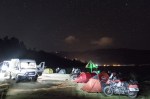
When we envisaged this adventure ride, it seemed logical to plan on camping more than half the time; we are all experienced outdoor types and felt that by camping we would get to experience real closeness to nature, save money, and have more freedom to stop where we wanted. When we did camp, we lived extraordinary moments; on an island in the Salar de Uyuni with a staggering crimson sunset, under the world’s biggest gold mine in Peru when the mine security staff came to check us out and ended up staying for dinner, or the time we stayed in a compound on the coast of Peru that was a cross between the day after Burning Man and a second rate refugee camp. Memorable nights indeed but, in two months on the road, we ended up camping only a dozen times and only four really in the wild.
There is almost no camping infrastructure in South America like US State Parks and there is no camping “culture” equivalent; the local people mostly thought we were just crazy to bother. Hotels and hostels are plentiful, comfortable, and cheap; when a bed is $10 why bother messing with the tent? And, of course, the weather was not very cooperative; torrential tropical rain near the Caribbean, howling winds in Patagonia, and bloody freezing temperatures in the high Andes.
Maybe these are all only excuses and we just didn’t want to admit that we were too damned old for all this camping shit and were not embarrassed to settle for a warm bed. Know thyself and your companions before you go.
Gear
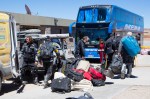
With the expectation of camping half the time, we all decided to bring bigger tents and serious beds that would not fit on our bikes and added a trailer dedicated to be a camp kitchen. This led to the van being seriously overstuffed with all our crap. The cascade effect followed – it was impossible to find anything at any point in time, we all brought way more stuff than was absolutely needed, and the overstuffed van caused mechanical issues. When we had to unload the van for customs inspection or when it went in for service, the overload became particularly apparent. When any of us got separated from the van and had to manage with whatever we carried on our bikes, we all realized how little we really needed to survive and flourish.
A pickup truck and small tents for emergencies might have been a better plan.
It may be a while before any of us plans another 65 day adventure with a dozen friends, but we’ll certainly think long and hard about these issues before launching next time. But, despite all this, or maybe because of it, we are all still talking to each other and remember every mishap and argument with a smile.
Borders.
We crossed international borders thirteen times from entering Colombia in Cartagena to packing the bikes into containers for the journey home from Punta Arenas in Chile 11,000 miles later. Every one of these followed a familiar four stage formula – Customs Out, Passport Out, Passport In, Customs In – but the time to do this varied enormously. Some crossings are organized with high speed computer systems and international cooperation with all the facilities from both countries in the same building, but some borders have their respective offices hundreds of miles of dirt roads apart with military personnel, large ledgers, and carbon copy documents filled by hand. Some places wanted to inspect the bikes and luggage and a few times we had to empty the van and trailer completely and pass all the luggage through x-ray and hand inspection. Mostly though we found officials who were helpful and just doing their jobs – no ripoffs or bribes or “special” taxes.
We did learn a few important lessons for the future. First, don’t ride with a custom plate – we had DAKAR and OFFRDGS along for our trip and they led to a lot of confusion especially in Chile where their computer systems expected numbers and nobody could understand why one plate said OF FROGS. Second, it was actually straightforward to follow the temporary import process for our bikes and the van – there is a process and every customs guy knows how to do this and it works as long as you actually leave the country again. Do NOT try and sell a bike that has been imported this way. Finally, you have to have clean originals for all your documents – title, registration, and letter of authorization from the bank if your bike is financed. Coming into Ecuador, we had one vehicle for which the originals had been left in Cartagena and this caused enough problems that the van was finally “deported” under police escort. But that’s a story for a longer discussion over a could of beers.
Thanks to Alfonse Palaima for these photographs.
 Colin's Travel Journal