
Border Control – Then and Now
Good neighbours make good fences,
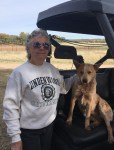
Maureen De La Ossa was raised on the border in Lochiel, Arizona; once a busy border crossing for trade and workers going back and forth between two agricultural communities, but for years it’s been a closed dead-end that leads to the border fence east of Nogales. Maureen went to first grade at the one room schoolhouse and has lived here all her life.
Maureen’s father was a border rider; paid to patrol the border on horseback in country he knew well, to prevent any cattle infected with hoof and mouth disease coming over from Mexico to infect American herds. It worked then and there are parallels today.
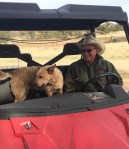
Maureen’s neighbor, rancher Mark Butler, suggested “Hey, pay a cowboy $3000 a month and feed his horse and he’d be happy to get the job done for a tenth of what Border Control costs”. Not a bad suggestion. We’ve heard people complain “There’ll soon be enough border patrol agents to hold hands along the damn border”. (Fact Check: There are about 20,000 agents plus the troops dispatched by Pres. Trump – so let’s say enough for 1% of the border if they all held hands)
We have spoken to a lot of people who are not very happy with the job that Customs and Border Patrol are doing. There are various complaints – the CBP agents are not from the area, don’t live in or contribute to the community, and are often reallocated just when they know their way around – union rules restrict their hours and places of work and limit them getting in harms way, which is not very effective when dealing with dangerous people – the agents spend a lot of their time sitting in their air-conditioned cars at strategic places far away from the border itself because they get credit for catching people and not for stopping them crossing in the first place.
In addition to an increase in people, the deployment of surveillance technology is visible all over the place. Here are two of them …
– there is a series of a dozen surveillance towers between the Coronado National Memorial and Nogales that appear to have optical and thermal sensors and are connected to a dark room full of contractors somewhere
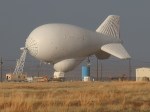
– both in Arizona and West Texas there are radar and other cameras and sensors being hauled aloft on tethered balloons.
In addition, every one of our vehicles and every one of our faces is photographed each time we travel through any one of the CBP checkpoints setup 50 miles or more from the border. The CBP has significant legal powers within 100 miles of the border that would be unconstitutional and outrageous elsewhere in the US and they are backed up with a huge technology investment.
The Border Industrial Congressional Complex in action.
But maybe putting a few agents on horses would be cheaper and more effective. Good neighbours make good fences.
 Colin's Travel Journal