
Humanitarian Aid – It’s Complicated
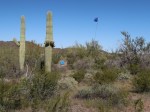
El Camino del Diablo – the Devil’s Highway – is a dirt road crossing the Sonoran Desert that was originally a Native American footpath but later used by conquistadors, missionaries and miners before the railroad to Yuma was opened in 1870. It is still a very sandy and very difficult road. Essentially unchanged for the last 1000 years.
Today it crosses three federal lands – the Organ Pipe Cactus National Monument, the Cabeza Prieta Nature Reserve, and the Barry Goldwater Air Force Range – and you need a permit to travel across it. It is a beautiful and challenging two day adventure in spectacular country.
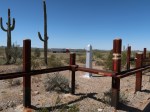
This area is also one of the most high traffic drug and people smuggling routes on the border. Across the vehicle fence, Mexico’s Highway 2 makes a perfect delivery point for migrants and smugglers.
Before the vehicle barrier was installed, drug smugglers would load a truck and crash north off Highway 2 through the desert to Ajo or other north-south routes. The vehicle fence put a stop to that (but still allows wildlife to cross) along with checkpoints far enough north. We met and talked to many Border Patrol and Federal Wildlife officers who have been sent here from all over the country and who scour this area regularly. The whole area is under heavy surveillance with mobile camera towers and magnetic and seismic sensors in the roads.
Though the number of Mexican migrants crossing here in search of work has declined over the years, the humanitarian challenges are still significant. Crossing this desert area is a dangerous proposition and over 3000 people have died here in the last ten years.
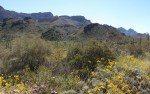
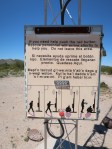
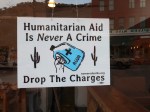
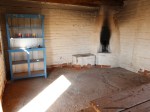
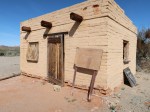
We rode through the Ajo Mountain area that recently had the first real rain in ten years and was exploding with beauty but even here there were water stations installed with permission from government and private land owners by Humane Borders – marked with flags and not providing plastic bottles that get dropped as garbage. In the Cabeza Prieta, activists who preferred not to deal with the federal owners, were recently prosecuted for trespass. In many places across the area, there are towers setup to allow migrants to turn themselves in and be rescued. At Tule Well there is a 30 year old casita where visitors have left food and messages of encouragement.
Talking to federal law enforcement, however, the concern is that well meaning assistance in the wrong places merely allows poorly prepared migrants to get further from help and just die further up the road and many then get into the bombing range with obvious additional dangers for them and their pursuers or helpers.
The humanitarian situation is complicated. The pressure for people to move is increasing and the human cost will only be reduced when there is a sensible worker visa program that allows people to cross legally. This will stop people dying and allow Border Patrol to focus on the drug problem.
– A great book on this area and the forces that drive people to continue to cross, read The Devil’s Highway: A True Story by Luis Alberto Urrea.
– For more on the humanitarian efforts go to https://humaneborders.org/)
 Colin's Travel Journal