Portland to Glacier Park in Montana and back. What a fantastic trip on the windiest roads of four states. Almost no freeways involved and every road a motorcycling delight; both on tarmac and into the back country.

The wind farms and wheat country of Eastern Oregon, the rolling scorched Palouse, up the Clearwater River in Idaho and Lolo Pass over the Bitterroots into Montana, Seeley Lake to Whitefish, mountain trails to Bowman Lake and Polebridge, Going-to-the-Sun Road in Glacier Park, Flathead Lake and the St. Joe River back to Pullman, Lewiston Hill and Rattlesnake Grade to Boggan’s Oasis and along the Grande Ronde to Joseph, Wallowa-Whitman Forest and Hess Road into the Hells Canyon, across the Blue Mountains to the Painted Hills and dirt roads to Antelope via the Rajneeshpuram, then the classic ride home through Shaniko, Maupin, and Mount Hood.

Around 2200 miles of some of the finest motorcycling roads in the world with stunning vistas, friendly folk, ghost towns, amazing colors, and just enough technical dirt to raise the heart rate and justify our collective investment in adventure motorcycles and lumpy types. Hey, we’ve got these bikes so we’d better get into trouble before we get home.

Too many highlights – I will always remember chasing a Great Horned Owl down a freezing forest road near Upper Whitefish Lake and then having it look down on me before flying off, the St. Joe River from St. Regis to St. Maries, having the camp site to ourselves at Kamiak Butte in the Palouse, the Grande Ronde Rive to Troy then the dirt road out of there to Flora, Muddy Creek Road from Mitchell to Rajneeshpuram.

But most of all … the shit-eating grins on every one of my fellow travelers’ faces each evening.

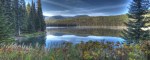
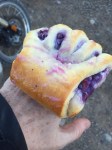
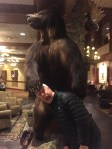
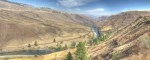
Photos: in front of Bowman Lake in Glacier Park, freezing still morning at Upper Whitefish Lake, Huckleberry Bear Claw in Polebridge, Grizzly Bear encounter, Grande Ronde River from the road from Troy to Flora. 

I’m Hooked and I’ll Be Back – But Why?

Sadly I had to leave before the end of the Isle of Man TT festival but, I admit it,  I’m addicted and I’ll definitely be back. But why? It’s just a motorbike race and there are lots of motorbike races that don’t require booking bloody ferry tickets a bloody year in advance. So what’s so special that brings people back time after time after time?

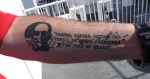
Case in point, meet Nigel and Paul from Wiltshire who I met on the ferry leaving Douglas. They’ve got sportbikes at home and have been to the TT many times but decided that this year they’d go cold turkey and give it a miss. Well how did that work out? Like most addicts, not very well. Two days before the racing they decided they had to go, they got foot passenger tickets on the ferry from Heysham, drove 250 miles to get there, landed on the island with no accommodation, and spent three days sleeping on the floor of the ferry terminal in order to see the races. That’s the pull of the Isle of Man TT. Then there’s Alan from Carlisle with the Hunter S. Thompson tattoo who hasn’t missed the TT in years.  There are thousands of stories like this. I met folks from Limoges and Munich and Sidney and everywhere in  Europe and the UK who had ridden impossibly overloaded sportbikes just to be HERE and camp by the TT course this week.

This was my first time here but, as I’m leaving, I’ll offer some personal observations as to why this place and this event are so special …

First, this really is a spectacular setting that truly amplifies the sense of speed and danger and excitement. The course provides complete access for spectators; it’s on public roads and I managed to ride the course four times so everyone can experience and see what the racers see and feel. When they race, the riders are within reach, passing trees and walls that give scale to the terrifying speed along a course that is full of imperfections and impossible to fully learn. They are exposed to danger in ways that are no longer possible in Formula1 or even MotoGP; I watched the Canadian Grand Prix this week and it was a complete yawn and even the World Superbike from Portugal on the same day looked tame by comparison. In both these events, the racers are separated from spectators and from harm by hundreds of feet of gravel and grass but, at the TT, everyone knows that the riders are risking their lives in a very real and tangible and immediate way. The adrenalin is palpable, substantial, and, most important, the adrenalin is communal; everyone shares a piece of the thrill that the riders must experience in an vicarious animal way.

Second, the event is unique and immediate. It is not one round in a championship where the title will eventually be decided by a complex formula of points at a sterile venue in Qatar months from now. The TT is here, the results are known immediately, and the celebration and honouring of the victors can start now. There are other motorbike races but not here and not on these roads and not this length.  There’s only one TT and you have to be here to experience it; you cannot get from television the smell and the people and the visceral connection to the machinery passing three feet away at 190mph. You have to get on a boat and come on a bike. The Isle of Man TT is Burning Man or the Goodwood Revival or the Palio de Siena or the bulls in Pamplona.

The Isle of Man TT is the Haj for bikers.

Fundamentally though it’s all about the people and their connection. The riders are all working class blokes from blue collar backgrounds who happen to have a talent for racing and have had their fear sensors surgically cauterised. They ride bikes that anyone could buy on roads that everyone recognises as being the roads they ride any weekend; the Isle of man could be Derbyshire or Wales or Kent or Oregon. All the fans on the island can associate and bond with the riders in a very tribal and concrete way; they are their people, with the same taste in beer, the same strong regional accents, who went to the same local schools, and started in the same oily jobs; these are markers that everyone here understands intimately and immediately. They are not fantasy creatures like Lewis Hamilton off with Kendall Jenner on a yacht at Monaco or David and Posh Beckham; the TT riders are accessible both physically and emotionally. We all think that could have been us.

If only.

Someone I Can Cheer …. 

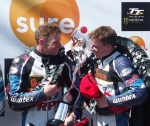
Everyone here it seems has their favourite and it’s usually someone from their home towns across the UK and across the world; whether it be Morecambe, Ballymoney, Wellington, Bingley, or Grimsby. But I could not find a team to cheer from my part of Nottinghamshire until this afternoon when I found sidecar outfit driver and passenger brothers Ben and Tom Birchall – from Mansfield. I didn’t ever live in Mansfield but it’s the town next door where I went to school. The picture of them on the podium says it all; they are clearly instantly likable blokes who are pleased as punch with their victory – and they speak with the same accent as I do. All good enough for the fan club registration.
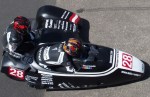
Looking further down the sidecar race card, I was surprised to see how often the team is a family affair. Ben and Tom Birchall are brothers but there are other brothers out there as well as sidecar outfits piloted by Father and Son (Ian and Carl Bell – Steve and Matty Saunders) by Husband and Wife (Didier and Helene Siro) and even one with Father and Daughter (Tony Baker and Fiona Baker Milligan) I suppose that there is a huge amount of trust required to make a sidecar both fast and safe and what better way than to rely on a family member.

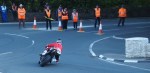
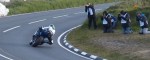
Finally, after a constant list of schedule changes and delays, I got to finally got out and see the TT the way it is supposed to be watched; from a damp piece of grassy wall within inches of the riders. The entry to Governors Bridge is a piece of the old Ramsey Road preserved for the TT and now called the Nook. The riders here are slowing down dramatically for the hard right hairpin of Governors Bridge that then leads back to the Grandstand straight. Close enough to the action for all my photos to be very blurred.

What a great time this has been to experience the TT and to learn some of its secrets. Lots more to learn to I expect to be back here soon.

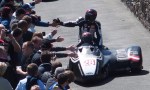
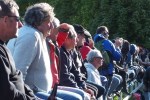
Photos: Ben and Tom Birchall on the podium – Sidecar team acknowledging their fans – Supersport ridder hard on the brakes and hard over into Governor’s Bridge – Row of fans.

Mad Sunday and Superbike TT – First Day of Racing …. 

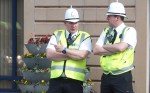
Mad Sunday at the Isle of Man TT is usually a day with no races where everyone, and I mean everyone, gets to ride the course together. I got out ahead of the pack this morning to record a video of a clean ride around the course on the first time it’s actually been dry enough to enjoy it; my fourth ride around and I’m beginning to know my way. The local police are particularly vigilant and their web site states “Mad Sunday is traditionally a time for that little bit of extra exuberance, which creates problems when people run out of skill, then run out of road. With a dry and sunny day forecast, we are expecting large numbers of bikes to be out from early doors. We are totally geared up for this, and will be out there at peak strength to quell any over-enthusiasm, and deal with people whose standards of road use fall below the expected standard.” A model of understatement I think you’ll agree but, as predicted, a rider ran out of skill and road at Goosenecks JUST as I arrived there and the road was blocked for an hour. So I stopped and had the pleasure of a long conversation with Inspector Andy Kneen on Parliament Square in Ramsey. I learned that: the police view the TT and it’s visitors as generally trouble free with “shared enthusiasm, mutual support, and generally good behaviour”. I also learned that they wear the white helmets all year round now because it was too much trouble to swap between seasons.

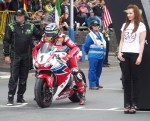
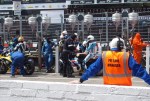
For the Superbike race I took advantage of the press access to the start line and pit return lane to really get close to what was happening – the intensity of the concentration at the start, the organised chaos during pit stops, and the disappointed looks when bikes were retired. Nothing prepares you for noise of the bikes coming down Glencrutchery Road at the end of the first lap at 1800mph; ironically with the cemetery as the backdrop. 

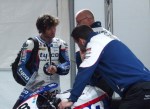
After the race, the winner Bruce Anstey came over to the VIP area and could not have been nicer in meeting and chatting with everyone who approached him; a genuinely nice guy. There was a group of New Zealand visitors (50th birthday trip for one of them) who were, needless to say, particularly enthusiastic to meet him; I suspect that alcohol had been consumed.

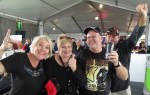
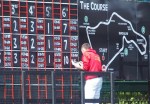
Photos: Bruce Anstey in front of a big poster of Bruce Anstey – John McGuinness straining to get started; I know this is John McGuinness as it’s written on his front tyre – Bobbies and their white helmets in typical bobby poses at Parliament Square, Ramsey – Pit Lane during fuel and tyre changes being carefully managed  – The scoreboard technology is PAINT; here the first six riders’numbers are being painted in for each lap along with their lap times – Charlie Boorman was in the VIP bar – Along with the aforementioned enthusiastic Kiwis.

What a great introduction to the people of the Isle of Man and the spectacle and camaraderie of the TT.

The Isle of Man TT – All about the Course and the Crowd … So I spent all of today learning about both.

I rode the course twice more and, with traffic lights, speed limits, fog, and rain, I just about beat the race winning time – from 1911. The fog on the mountain was so thick the first time this morning before breakfast that the postman overtook me in his little red van. Well he does have windscreen wipers which my Shoei does not. That’s my defense and I’m sticking to it.

My best time was 45 minutes for the 37.7 miles and this evening Bruce Anstey just did it in less than 18 minutes and the more you get to see the details of the TT course, the more respect you have to afford these riders. There is nothing special that has been done to these roads that make you think it’s a track. There are no potholes but there are crazy kerbs, people sitting in their front gardens two feet from your helmet, slippery white lines, intrusive walls, humpbacks, every corner is totally blind between high walls and hedges, and the protection on the lamp posts and walls is laughable. The road surface is generally good but I was totally amazed at the bumpiness of the section from Sulby Bridge to Ramsey – apparently the tree roots are constantly shifting the tarmac – I am riding a BMW K1600GT and it was skittering all over the place even at legal-ish speeds and I cannot imagine what this would be like at race speeds.

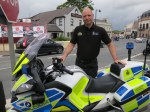
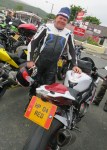
Stopping a few times along the way, I met a lot of interesting people; men and their wives (sometimes) from all over the place but generally blue collar British lads just like the blue collar British riders; working blokes who take their bikes seriously but laugh readily about everything else. Meet Jimmy from Glasgow (I kid you not) with an accent that needed sub-titles who is ex-RAF, ex-police, now a builder in Fife who rode his BMW GS Adventure in the GS Trophy in Wales last week, rode home to Glasgow, swapped bikes for his HP4 and took off to the ferry to Douglas and was having a blast. I met Alan from the Lancashire police who are here helping their Manx colleagues stay on top of things and graciously let me sample his bike.

Finally I watched qualifying from Greg Ny Baa then back at the pit wall at the grandstand. I was not close enough to Guy Martin to hear what he was saying to his crew but I understand he had a problem with false neutrals and claimed he lost 30 seconds as a result. They’ll be working hard in the BMW workshop tonight.

Crazy course – lovely people.

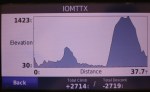
Photos: Guy Martin was in the Tyco BMW tent for a long time after he finished qualifying – Alan from the Lancashire police – The profile of the course taken from my GPS track for exactly one lap; it’s called the mountain for a reason – rider at Greg Ny Baa getting a lot of photographer focus – Jimmy from Glasgow.

You Always Remember Your First …. Well this is my first visit to the Isle of Man TT so let’s start with a little perspective and history for the uninitiated – ME.

The Isle of Man is a British Crown Dependency – 200 square miles of rock in the Irish Sea that somehow never quite officially became part of the United Kingdom but is essentially under its wing; Queen Elizabeth II is Lord of Mann. The island can make most of its own rules for things like finance and taxes which makes it a tax haven but, much more importantly for this week, it independently controls matters of road safety. Or not.

The first race for motorcycles on closed public roads here, won at a speed of 38 mph, took place in 1907; the race originally being intended for motorcycles “similar to those sold to the public,” called touring machines; hence the title Tourist Trophy. The first race to use the current 37 mile Mountain Course over Snaefell was in 1911 and was won on an Indian at an average speed of 47mph. This was also the first year, but sadly not the last, when a rider, Victor Surridge, was killed in a crash in the race.

From 1949 to 1976 the race was included as the UK round of the FIM Motorcycle Gran Prix world championship and was won by legends of the age; Giacomo Agostini and Mike Hailwood each won it five times in a row and the likes of John Surtees and Geoff Duke won the rest. At the end of this era a rider boycott brought attention to the nuttiness of the safety issues and the GP chose more sensible locations.

Since then the race has been dominated by working class British lads who have somehow skipped the fear gene in their evolution. Joey Dunlop is still op top but John McGuinness, Guy Martin, Michael Rutter, Bruce Anstey are all here this week wanting to chase Dunlop.

The first 100mph lap was by Geoff Duke in 1955 and the current lap record is help by Bruce Anstey at 132mph. This morning I got off the ferry from Liverpool at 5:30am, downed a double espresso, and decided to ride the complete course before breakfast with NOBODY else on the road. A truly magical ride. 

Even though the mountain section from Ramsey back to Douglas is only open in one direction, it was a bit damp and I was backing off at 120mph. To think that riders are coming over here at 200mph is truly terrifying.

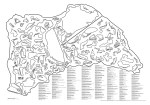
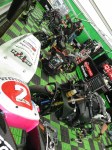
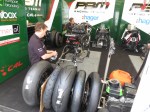
Images here: The Mountain Course on the same scale as a few other famous race tracks; the other two large ones are Le Man and the Nurburgring for comparison – A replica of Mike Hailwood’s 1966 Honda RC181 – the Kawasaki’s of James Hillier and Ian Hutchinson being prepared.

Are today’s racers riding motorcycles “similar to those sold to the public”? 

You decide.

If you want to buy a copy of the circuit diagram – go here:

http://www.redbubble.com/people/sirdunny/works/11752799-race-tracks-to-scale-listed-and-labelled?p=art-print

“I know what it’s like to be left behind”

The planet is totally screwed but still populated with lovely people.

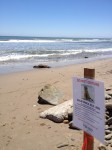
Exhibit One: At Ventura today there was an emaciated juvenile sea lion washed up on the beach; alive, in pain, and dying. The abnormal wind patterns and warmer waters have driven the prey for the mother sea lions further away from the Channel Islands and deeper in the Pacific, so mothers are taking longer to get food and more offspring are lost or set off on their own search for food. Hundreds are being washed up on the California coast; so many that the rescue teams can just post signs but not retrieve them all. The little guy here was alive but not for long.

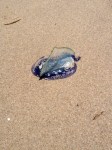
Exhibit Two: This Velella is one of the beautiful blue jellyfish that are being washed ashore by the thousands in Oregon and California. The Velella are each their own biological Kon-Tiki with a sail that sits above the water that causes them to move with the wind. Amazingly Velellas that live on opposite sides of the Pacific and on opposite sides of the equator have their fins arranged in a different orientation to allow them to track according to the prevailing winds. When the winds are seasonally unusual or unusually strong, they end up on the beaches like today.

Exhibit Three: During the discussion on the beach about the sea lion, we noticed a duckling that had become separated from its mother and the rest of her brood splashing in the surf. By the time we noticed, mother and siblings were heading out to sea away from the hubbub. “Oh no, how do we get him back to his mother?” cried Claire. At this point a young man took off his shoes and shirt, gave his keys and phone to his mother, grabbed the duckling in his hat, said “I know what it’s like to be left behind”, then swam out with the duckling in its own little lifeboat and reunited it with its mother.

We would have loved to get to know more about his past experience and to have thanked him. Screwed up ecosystem in all sorts of ways.

Sea Lions Washed Ashore
http://www.nytimes.com/2015/03/13/us/starving-sea-lions-washing-ashore-by-the-hundreds-in-california.html?_r=0

Velellas On The Beaches
http://motherboard.vice.com/read/weird-blue-jellyfish-are-washing-up-on-oregons-beaches

In the game of which boys have the most toys, I think I’ve found a winner.

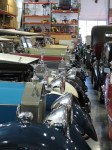
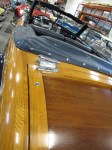
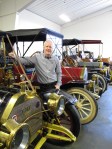
Today I had the chance to visit a friend’s truly astonishing personal car collection; close to 400 cars, one of the largest collections in the world in private hands. The owner, who wishes that he and the location remain anonymous, is a dedicated fanatic that has amassed these over 20 years and intends for them to be made publicly available in some interesting ways in the future. Just as soon as he’s finished the collection and its home. 

Breathtaking spectacle and every one of these cars is in perfect condition and runs.

A few more photos can be found here:-

https://www.flickr.com/photos/colin-pdx/sets/72157651595734008/

You have to get into an Indian mindset to appreciate India. As a western traveler it is very easy to be repulsed by the downsides – horrible dangerous roads, garbage, poverty, corruption – but there are delights all over the place that overwhelm all this – people, food, culture, history, fascination. 

On this trip we traveled from Fort Kochi and the Backwaters in Kerala for which the state is famous (India’s bayou perhaps) by train to Thrissur and Kannur and, for several days, never saw another non-Indian face before getting to Goa.

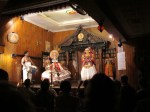
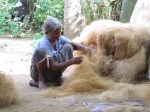
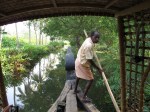
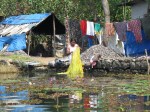
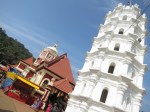
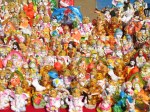
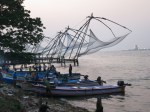
Here are some images of the Chinese Nets in Fort Kochi – Kathakali Theatre performed in elaborate makeup and costumes the same way for the last five hundred years – the Backwaters where life resembles any century before this one with washing in the open water and old people making ropes out of coconut husks – Shri Shantadurga temple festival near Ponda in Goa.

Auto Rickshaw – One of the delights of traveling in India – cheap, practical and throws you right into the sights, sounds, and smells of the street. This is a short extract from a ride in Kochi, Kerala with the added color commentary from our driver. 

Kerala is the heart of spice growing in India and this is the appropriately named Bazaar Road, its main trading hub. The video cannot, of course, transmit the effect of seeming to ride straight through the ingredients of garam masala with the amazing distinct smells of cardamon, cloves, cinnamon, and pepper with hints of diesel and garbage.

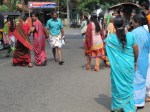
Almost everybody here is wearing traditional outfits which was typical all over Kerala. We did not see one woman that was not dressed in sari or tunic and leggings, and at least half the men wore the lungi; the cotton skirt worn in different ways all over the Arabian peninsula and South Asia that Wikipedia describes as “particularly popular in regions where the heat and humidity create an unpleasant climate for trousers.” Amen to that. 

Our driver here points out a tiny church. In Kerala there are about equal numbers of Muslims, HIndus, and Catholics who seem to get on without any strife. There is also a small Jewish community that dates back to the 12th century but, after Partition in India, the Jewish families almost all upped and left for Israel.