Battles That Shaped South Africa – Blood River.

All the battles that decided the shape of modern South Africa took place within fifty miles of each other in what is now KwaZulu-Natal but was once Zululand.

In 1838 the Boers def. Zulus and in 1879 the British def. Zulus.

Like Wimbledon, the winners of the two semi-finals went on to meet in the final. (Spoiler alert – Britain won)

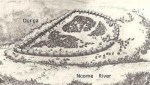
The Boers – Afrikaner descendants of the Dutch settlers – were heading east as part of the Great Trek in search of more room for farms and family and to get away from the British who had taken control of the Cape Colony. At Blood River, after the Zulu chief reneged on a territorial agreement and killed the Boer leader, Piet Retief, the Zulus attacked the group and were soundly defeated – there were reportedly 3000 dead Zulus whose deaths gave the river its name and apparently no injuries among the trekkers.

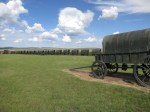
Today, there are two memorials. One formed by 64 identical wagons cast in bronze representing the scene and celebrating the trekker victory. In the far distance there is a red-roofed building which is the Ncome Museum that was opened in 1999 to offer a Zulu “re-interpretation” of the events.

The Afrikaner consider this site to be sacred proof that God’s hand was involved in their victory and that they had divine right to exist as a people – the roots of white nationalism. Add to this the fact that The Great Trek that took place through the 1830s and 1840s was essentially triggered by Great Britain’s abolition of slavery and you have here on this spot the roots of apartheid.

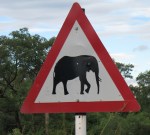
African elephants are losing two battles – against Africans for their habitat and against the Chinese for their ivory.

The numbers are truly staggering. When the white man started to “explore” Africa, there were reckoned to be 25 million elephants on the continent. There are now less than half a million. That’s 2% of their original population and it is estimated that over 30,000 elephants are killed each year so they could be all gone in a decade.

The poaching is on an industrial scale – whole herds killed by gangs that mount weeks-long campaigns to meet the need for ivory from the increasingly rich Chinese – the destination for over 90% of illegal ivory. This can only happen with planning, serious investment, compliance and corruption of African officials, and a huge blind eye turned by the Chinese government who claim that noting illegal is happening on their watch. Around 20,000 elephants are killed for ivory per year. Not one or two picked off by starving villagers – whole communities including infants and females.

Additionally local conflicts with farmers or villagers almost double that number – elephants picked off because they trampled a fence or because a village needed food.

This is a slaughter along the lines of the American Buffalo which was hunted effectively to extinction.

The elephants are losing but we are the losers.

(The only elephants that we saw at Kruger this week were lone males who are kicked out by the matriarchs when they are not needed. So they wanted alone until it’s time for them to compete to get back into the group and perform their manly functions. No I don’t mean pay the bills, unblock sinks, and take out the garbage)

Kruger National Park.

Kruger is one of the largest game preserves in Africa, a huge home to a lot of threatened species, and an overwhelming experience to drive around and see these beautiful creatures in their natural environment. But, compared to the vastness of the continent, Kruger is a postage stamp of protection for its inhabitants. At around 8,000 square miles, the park is the same size as Oregon’s Lake County which is about 8% of Oregon. That’s tiny. It’s large zoo with only one shared cage.

This week the weather has been truly awful with torrential rain for days leading to flooded rivers and overwhelmed bridges. All the unpaved backroads are closed for fear of visitors getting bogged down, stranded, and eaten; not good for business.

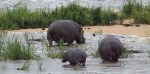
The grass is also feet higher than normal so not ideal for spotting critters. Despite having to stick to the main roads we still managed to see a pride of lions around a recently eaten buffalo – then a bloat of hippos, a troop of baboons, a tower of giraffes, a zeal of zebras, a bask of crocodiles, and dozens of other animals in the ark that is Kruger. 

Maybe I’ll come back when it’s dry.

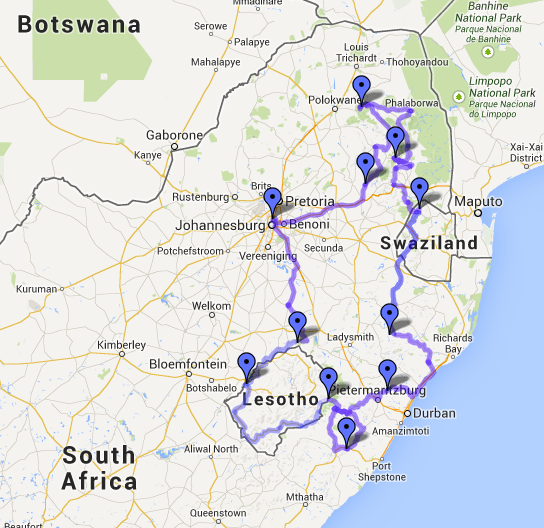
March 2014. So this is the plan for the next couple of weeks. A motorbike loop with Ayres Adventures around the eastern half of South Africa along the Drakensberg Mountains, with stops in a few historical sites from the Boer and Zulu Wars, a day in Kruger National Park with a long lens, quick run along the Indian Ocean, the infamous Sani Pass, and two more countries stamped in the passport – Swaziland and Lesotho. Both of these are independent kingdoms landlocked inside South Africa – each about the size and GDP of a couple of Oregon counties.

Just for comparison:

South Africa
– 190K Sq Miles which is about three times the size of California and five time the size of Oregon.
– GDP $385B – equivalent to Thailand, Austria, Venezuela or Michigan.

Swaziland
– 3K Sq Miles – same as Connecticut or Klamath County, Oregon
– GDP $4B – a little less than the GDP of Bend, Oregon

Lesotho
– 4K Sq Miles – say the area of Massachusetts or Malheur County in Oregon.
– GDP $2B – one of the world’s ten smallest national economies.

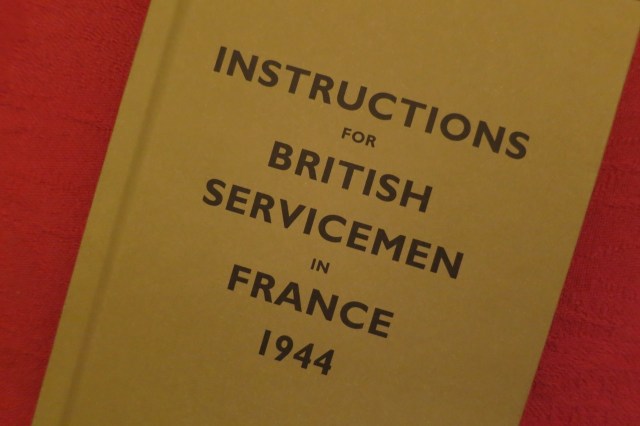
Instructions for British Servicemen in France 1944 – Could easily be titled Instructions for British Tourists in France 2014.

What a delightful and touching document. This little book was provided to each invading soldier and was, according to the Daily Express, “the gentlest and most human article the soldier carries to the wars”. The pamphlet was written by Daily Telegraph journalist, Herbert Ziman, and opened with WInston Churchill’s statement that “France will rise again free, united, and independent to stand guard over the brightening opportunities we mean to rescue and rebuild”.

It contains a concise history of France, what the French must have lived through under German occupation, what the French think of the British, and provides very clear guidance on how the British would like to be thought of by the French when the war was over.

It starts very clearly … “A new British Expeditionary Force, which includes you, is going to France. You are to assist personally in pushing the Germans out of France and back to where they belong. In the process, you will meet the French …”.

And provides some classic pieces of advice that British visitors today would do well to adhere to but often do not; to the detriment of all our reputations …

– “If you should happen to imagine that the first pretty French girl who smiles at you intends to dance the can-can or take you to bed, you will risk stirring up a lot of trouble for yourself and for our relations with the French”.

– “The French are more polite than most of us. Remember to call them ‘Monsieur, Madame, Mademoiselle,’ – not just ‘Oy’ …”

Most surprising to me, these instructions go to great trouble not to paint the regular German soldiers as demons. It states “The French are our friends. The Germans are our enemies and the enemies of France. Remember that the Germans individually often behaved well in France. We have got to behave better”.

Good advice for any time.

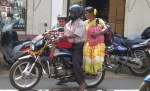
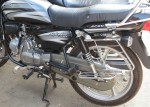
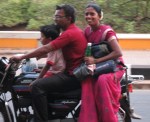
Every motorbike in India has a chrome rack on the left side – Not because all Indian bikers put their luggage on the left side but because all Indian ladies sit sideways.

This is the only way to ride for ladies wearing a sari and they do not want them tangled up in the wheel, chain, or exhaust. Why they all sit leftwards I have no idea.

Here are a few examples more or less at random from the last couple of days – picking up the kids from school with shopping and school bags, taking the little baby maharaja to see the family on Sunday. There were plenty of other examples of four and five people per bike.

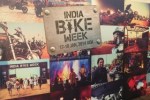
India Bike Week 2014 – When we arranged this little vacation in Goa, we were planning on enjoying sea, sand, seafood, and yoga. As we left the airport, however, the first big billboard we saw was advertising India Bike Week – The Woodstock of Bike Festivals. Despite the hyperbole, how could I not go? Everything happens for a reason in India.

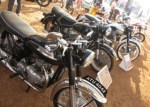
This is an amazing (weekend) event trying to cater for every bike fantasy – large trade show, talks by famous bike names, huge cinema tent, stunt riding competition, custom bike build off, vintage bike concours, numerous bars with all kinds of music, and, of course, the bikini bike wash, and, for reasons that escape me completely, cage fighting.

With all this variety and over stimulation, this event should really be called India Harley Week. Harley even launched their new Street 750 at the event; the first Harley to be assemble outside the US and specifically for the Indian market. The Harley is clearly the ride to which the huge majority of attendees aspired and it was, far and away, the most common bike in the attendee parking which was situated in the centre of the huge arena so everyone could show off their ride. There were hundreds of guys kitted out like they were at Sturgis and who had evidently ridden here in packs from all across India, terrorising the villagers as they went.

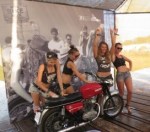
I tried very hard to find a bike anywhere that was not a Harley or a Royal Enfield but there were very few. The ONLY Ducati present at the event was a 1966 Ducati Monza that I caught at the Bikini Bike Wash. That’s my excuse for hanging out there at least.

BHV – The Last Real Department Store

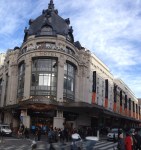
Every homeowner in Paris eventually learns to love the Bazar de l’Hotel de Ville (BHV pronounced Bay-Ash-Vay) It is a complete and comprehensive department store where you can buy everything from appliances, to underwear, to soap, to glassware, to luggage, to you name it. Want to get a TV, new socks, and dishwasher liquid – head for BHV.

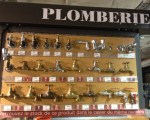
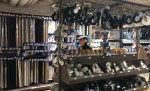
But the real secret is in the basement which is every Parisian handyman’s dream – or nightmare depending on whether you enjoy DIY.

It is almost impossible to describe the range of tools, materials, and solutions for every imaginable problem or remodel or repair. Want to buy a table saw, change the wheels on your wagon and the legs on your table, repair shoes or fix a hole in a fur coat, or bottle your favourite wine, or change a tap – head for the basement at BHV. There is a whole section of “micro-outillage” (small tools) for hobbyists, a place to order custom steelwork or custom doormats, fire irons and bellows, and I always find some kind of tool or product that I have never seen in the USA – in this case, little push and clip connectors for electrical wiring to avoid the use of dominoes or those horrible twist-on wire nuts.

Next time I remodel in the US, I’m going to run 220V to every room just so I can add Euro standard outlets to power all the gadgets and tools you can find here.

Big Kids and Little Kids in Paris – Walking in Paris on Christmas Day.

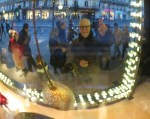
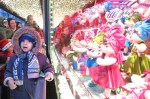
On Blvd Haussmann walking past Les Grands Magasins with their window displays with good old-fashioned puppets operated by pulleys and strings – maybe these kids are marveling at something that is not operated by a touch screen – and sponsored by Prada just so the adults get a message too.

Place de la Concorde with all manner of sugar and lollipops and Barbe a Papa (fathers beard – which is candy floss) and all sorts of other things guaranteed to rot your teeth and keep the kids wired until midnight.

The Pyramide du Louvre contrasting with the Palais du Louvre – still a great place to stroll and enjoy the delights of Paris with Claire and Jona.

Living in Paris seems like living in a village because of the street markets.

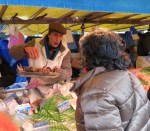
There are almost a hundred markets across Paris that are setup and taken away several times a week and shopping there is a huge part of the essential life of a Parisian. People know the oyster guy and that his oysters were still in the sea yesterday and that they cost half what they’d cost at Monoprix. They come back to the same butcher and form long lines to get their vegetables from a trusted source. They bump into their neighbours and enter into long discussions about the best goat cheese and the best way to cook rabbit.

This was Christmas Eve and everyone was loading up on the good stuff for La Fete de Reveillon de Noel – here you can see huge langouste, rabbit, fresh octopus, coquille St. Jacques, and cheeses from every corner of the land.

I also noticed that the fish merchant explaining his lobster recipe is also selling “Dos de Colin” – I share my name with a fish in France – which is hake or coley in English.

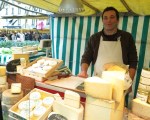
Finally, we came across the cheese merchant shown here who Rosine met on a hike in Morrocco a few weeks ago – very small world. He gave up his career in marketing to look after his kids and work three days a week selling cheese and fois gras from farms near his family home in l’Aveyron near Toulouse.

Everyone has a different plan.

Markets in Paris
http://marches.equipements.paris.fr/