Welsh in Wales for Who?

Our chosen route from London to Ireland led through Wales to the ferry at Holyhead. A blast across England on the motorways then to Shropshire, into Wales and through the Snowdonia National Park where Edmund Hillary trained for the ascent of Everest; beautiful country for climbers, hikers, bikers, and sheep and pretty much nobody else.

The Welsh cling tenaciously to their isolation, their uniqueness, and their traditions – male voice choirs, druids, Eisteddfods, and an old Celtic language that has impossibly long words with almost no vowels; spoken only in Wales and Chubut Province, Argentina. A long story.

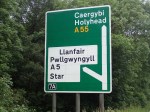
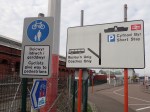
Everywhere in Wales the public signage is in both languages as you would expect in this cultural enclave but I wonder how many people this is for. I understand the power of nationalism and Plaid Cymru but do we really need both languages everywhere? There are about half a million people in the country who speak Welsh – 20% of the population.

But you only need dual language signs for public safety if there are people who ONLY speak Welsh (monoglots) and wouldn’t otherwise get the message. So how many people only speak Welsh? The answer is ZERO. Apparently 50 years ago it was common but now it is unheard of for anyone over the age of 4 to not speak English.

SO – the signs are just for show – to confuse the tourists and to reassure the Welsh that they are still in Wales and voted for Plaid Cymru.

Talking of long words. The place with the longest name is, unsurprisingly, in Wales. The village of Llanfair­pwllgwyngyll­gogery­chwyrn­drobwll­llan­tysilio­gogo­goch is by the Menai Strait in Anglesey and, again unsurprisingly, the name does not fit well on road signs as shown here. The name is pronounced “lan-vire-pool-guin-gith-go-ger-u-queern-drob-ooth-clandus-ilio-gogo-goch … and … translates roughly as “St Mary’s Church in the Hollow of the White Hazel near a Rapid Whirlpool and the Church of St. Tysilio near the Red Cave”.”

Welcome to Wales.

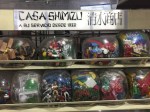
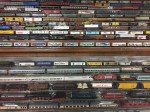
Museo Juguete Antiguo – Antique Toy Museum

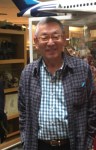
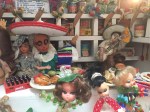
Roberto Shimizu’s family has been importing toys into Mexico since 1938. Since he was a boy, Roberto has hoarded examples of these toys and now has one of the world’s most bizarre museums to show them; five floors of displays in a former warehouse and office where the toys are collected and displayed in old industrial machinery and pharmacy shelves that he has designed and created personally.

There are over 40,000 objects and a rotating collection of murals on the roof terrace that defy any attempt to understand the curation and without any explanation from Shimizu-san.

Why does he have Lucha Libre figures stuffed into tacos and tortas like shrimps in a sauce? We have no idea and he just shrugged when asked.

Pedro Reyes – Architect and Artist.

Traveling with PICA allowed us to get access to the private home of Pedro Reyes; an artist and architect whose work “aims to increase individual or collective agency in social, environmental or educational situations.” Yes, we had a lot of language like this all week; art speak in all its glory.

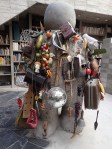
His home is an homage to concrete but still feels soft and welcoming. I particularly loved the sculpture of modern man hung with all his cares and possessions with whom we can all associate.

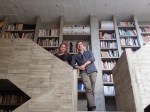
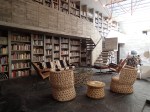
Kristan and Spencer are the two figures in the concrete library. They organized and led this trip and we will all follow them anywhere in future.

Mexico City – We’ll Be Back.  

This trip was organized and led by Kristan Kennedy and Spencer Byrne-Seres from the Portland Institute for Contemporary Art (PICA) – to include VIP access to the city’s two leading art fairs, tours of eight art museums in Mexico City and Puebla, and private access to two homes that were showcases of contemporary art and architecture. Throw in some of the finest dining and drinking in the city, a couple of days wandering the streets, and an evening of Lucha Libre and you have a truly spectacular trip.

I was a little apprehensive flying into a city of over twenty million people with all the well known problems that are befalling Mexico at the moment, but I found Mexico City to be accessible, friendly, and beautiful. Kristan and Spencer did an amazing job at planning this trip and making sure we all squeezed the maximum out of our stay. Next time – we’ll be there.

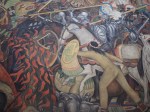
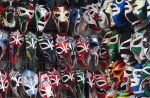
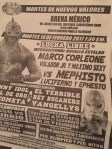
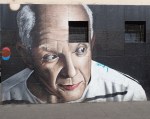
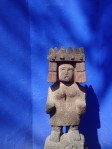
Photos here … Segment of the Diego Rivera murals in the Palacio National, Lucha Libre and their masks and poster, Picasso mural in the street, rooftops of Puebla from the terrace of Museo Ampato, small statue in the blue of the Frida Kahlo house, “Fear Eats the Soul” by Rirkrit Tiravanija at Zona Maco art fair, Museo Soumaya built by Carlos Slim, the world’s richest man, to house just a sample of his bizarre collection of art.

We Had A Lot Of Help.

The Expedition65 crew developed the plan for this adventure. but we were smart enough to get expert help when we had the opportunity. We would all be remiss if we did not recognize the amazing contribution of our friends in South America. And we would have been lost – literally – without them.

Colombia

This is a beautiful country that has been officially at war with the FARC rebel group since La Violencia in 1948. Though a ceasefire was signed in 2016, there are still a lot of jungley places that should be avoided; especially by a group of riders who are used to just heading off-road into the wilderness. We were lucky enough to be helped by Luis Alejandro Reyes the owner of Adventures57. Luis provides training and tours to all corners of Colombia from their base in Bogota and he provided a recommended route and tons of helpful advice and then set us up with his friends to see places we would otherwise not have seen. In addition, Miguel Ponce de Leon rode with us for a few days to launch us on our way. What a great way to start our ride along the continent.

Ecuador

Jorge Cherez and his friends in Ecuador have a motorcycle club they call The Brosters. The origin of the name is too complicated to go into here but these guys are amazing and connected and knowledgeable and hospitable and CRAZY beyond measure. They opened up their clubhouse for the most outrageous party of the trip and and escorted us around their amazing country. The night ride in Quito, the offroad trip around Chimborazo, food and friendship, too much to describe. The problem about having to leave Ecuador because the van was deported? Now that’s a story for another time.

Bolivia

Sergio Ballivian was born in La Paz, educated in the US and Canada, and splits his time between Bolivia and Boulder, Colorado. There are lots of streets and plazas in Bolivia named Ballivian, so I’m sure his ancestors played a role in the country’s history. A former member of the National Geographic photo department, he now runs Explore Bolivia, leading custom photo tours. Sergio constructed a route for us to see the wildest and toughest places in Bolivia, escorted us most of the way, and only lost his temper with us once over our willful disobedience and incompetence on the trail – and he was right to do so.

In all three of these countries we gained access to places and roads and homes and lives that would otherwise have been invisible to us. We were not tourists but guests of these gentlemen and their friends and that made the trip extra special for all of us.

They all left us with the final lasting impression that we had still barely scratched the surface of their countries. We will all definitely return to explore the rest and I hope we see these guys again and again.

Thanks to Alfonse Palaima for these photos:

– Jorge Cherez 

– Luis Alejandro Reyes and Miguel Ponce de Leon

– Sergio Ballivian 

#Expedition65 #Adventures57 #BMWBrosters #ExploreBolivia 

Not All Of The Adventure Was Part Of The Plan.

Expedition65 took a year and half to plan and nothing was left to chance; all our bikes were serviced, spares were carefully selected and packed. the route and points of interest were meticulously researched, logistics double checked, critical reservations made, and fuel and tires cached along the continent.

So it all worked perfectly? Right? WRONG. Despite anyone’s best efforts, no battle plan survives the first contact with the enemy and problems come from the most unexpected places.

These are just a few of the lessons learned from things that did not turn out quite as planned. 

Filming

We were all delighted to have Sterling Noren join Expedition65 as our embedded film maker. Sterling is an excellent rider, a genial companion, and a very talented storyteller. But none of us remotely understood what it would take to make a professional movie of our trip. We never really decided whether we were making a glossy travelogue, a reality show of the trials and tribulations and injuries and breakages, or an instruction video for future adventurers. Maybe we tried to do all of the above.

When you see a beautiful shot of adventure riders gliding through a gorgeous backdrop accompanied by an engaging storyline, you do not see the group waiting for the camera setup or riding the road twice because a local truck got in the shot, or arguing about how much time this is taking, not to mention the frustration and danger that ensues from arriving late and in the dark at your chosen destination. Very early in the journey, we organically started to split into smaller groups and agreed that we would take turns at being the stars or the extras, in the movie each day.

I am sure that we will all be thrilled with the end result from Sterling and we will forget the distractions, frustrations and delays, but believe me, if you want to make a film of your next adventure, make sure everyone is motivated and knows what to expect.

Camping

When we envisaged this adventure ride, it seemed logical to plan on camping more than half the time; we are all experienced outdoor types and felt that by camping we would get to experience real closeness to nature, save  money, and  have more freedom to stop where we wanted. When we did camp, we lived extraordinary moments; on an island in the Salar de Uyuni with a staggering crimson sunset, under the world’s biggest gold mine in Peru when the mine security staff came to check us out and ended up staying for dinner, or the time we stayed in a compound on the coast of Peru that was a cross between the day after Burning Man and a second rate refugee camp. Memorable nights indeed but, in two months on the road, we ended up camping only a dozen times and only four really in the wild.

There is almost no camping infrastructure in South America like US State Parks and there is no camping “culture” equivalent; the local people mostly thought we were just crazy to bother.  Hotels and hostels are plentiful, comfortable, and cheap; when a bed is $10 why bother messing with the tent? And, of course, the weather was not very cooperative; torrential tropical rain near the Caribbean, howling winds in Patagonia, and bloody freezing temperatures in the high Andes.

Maybe these are all only excuses and we just didn’t want to admit that we were too damned old for all this camping shit and were not embarrassed to settle for a warm bed. Know thyself and your companions before you go.

Gear

With the expectation of camping half the time, we all decided to bring bigger tents and serious beds that would not fit on our bikes and added a trailer dedicated to be a camp kitchen. This led to the van being seriously overstuffed with all our crap. The cascade effect followed – it was impossible to find anything at any point in time, we all brought way more stuff than was absolutely needed, and the overstuffed van caused mechanical issues. When we had to unload the van for customs inspection or when it went in for service, the overload became particularly apparent. When any of us got separated from the van and had to manage with whatever we carried on our bikes, we all realized how little we really needed to survive and flourish.

A pickup truck and small tents for emergencies might have been a better plan.

It may be a while before any of us plans another 65 day adventure with a dozen friends, but we’ll certainly think long and hard about these issues before launching next time. But, despite all this, or maybe because of it, we are all still talking to each other and remember every mishap and argument with a smile.

Borders.

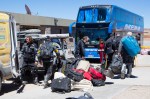
We crossed international borders thirteen times from entering Colombia in Cartagena to packing the bikes into containers for the journey home from Punta Arenas in Chile 11,000 miles later. Every one of these followed a familiar four stage formula – Customs Out, Passport Out, Passport In, Customs In – but the time to do this varied enormously. Some crossings are organized with high speed computer systems and international cooperation with all the facilities from both countries in the same building, but some borders have their respective offices hundreds of miles of dirt roads apart with military personnel, large ledgers, and carbon copy documents filled by hand. Some places wanted to inspect the bikes and luggage and a few times we had to empty the van and trailer completely and pass all the luggage through x-ray and hand inspection. Mostly though we found officials who were helpful and just doing their jobs – no ripoffs or bribes or “special” taxes.

We did learn a few important lessons for the future. First, don’t ride with a custom plate – we had DAKAR and OFFRDGS along for our trip and they led to a lot of confusion especially in Chile where their computer systems expected numbers and nobody could understand why one plate said OF FROGS.  Second, it was actually straightforward to follow the temporary import process for our bikes and the van – there is a process and every customs guy knows how to do this and it works as long as you actually leave the country again. Do NOT try and sell a bike that has been imported this way. Finally, you have to have clean originals for all your documents – title, registration, and letter of authorization from the bank if your bike is financed. Coming into Ecuador, we had one vehicle for which the originals had been left in Cartagena and this caused enough problems that the van was finally “deported” under police escort. But that’s a story for a longer discussion over a could of beers.

Thanks to Alfonse Palaima for these photographs.
Playtime Isn’t Over Until The Toys Are Put Away.

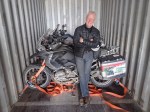
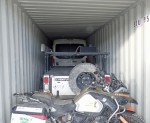
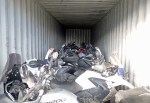
It only sunk in that this adventure was over when the doors closed on these two containers at the port of Punta Arenas, Chile.

We spent the morning collecting all our stuff and dealing with the documentation required to send it all home – inventory the baggage, hand in the temporary import paperwork for the vehicles, check the boxes, genuflect in front of officials. Then two containers arrived, we loaded everything, and made sure it was all strapped down tightly before one more official visit and the lead seals were added to the doors.
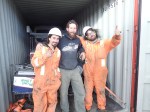
This took all day and the two dock hands that worked with us were amazing – Pablo and Pablo worked their asses off and worked with all our suggestions for making the bikes safe and secure.

I have no idea when I will see any of my stuff again.

Meet Victor Sierra

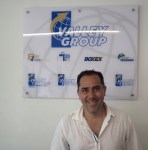
Victor Sierra has more charm and more energy per pound than any human being I have met.

Victor is the owner of Valley Group, the company that arranged all the shipping and logistics of our bikes, our van, and our stuff from Miami to Cartagena and back again from Punta Arenas. More than that, Victor is a keen adventure rider and joined us for the first few days of our journey through his home country of Colombia and was a tireless ambassador and gracious host every step of the way.

He then flew down to join us at the end of the trip and drove with us to Ushuaia and back to the final shipping point to make sure that everything was taken care of perfectly. We were held up at the ferry from Tierra del Fuego for 12 hours waiting for the wind to die down and it was very clear that the operators were not treating motorcycles with a very high priority when the ferry restarted. Somehow Victor got us and the van together on the next ferry and I have no idea how he managed to make this happen.

He’s a miracle worker. We miss Victor already.

Ruta40 – Go Quickly – The World Is Being Paved.

There are a few legendary roads in the world that allow you to ride a cross section of a country and get a glimpse behind the curtain at real life; away from the capital cities and tourist centres. Route 66, the Stuart Highway, the Trans Canada, and the M1 through Hemel Hempstead. Just threw in the last one to see if you were paying attention.

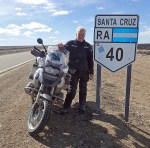
Ruta 40 is Argentina’s longest road; almost 5,000 km long from one end of the country by Bolivia in the north to Rio Gallegos on the Patagonian Atlantic coast. It was started as a national project in 1935 and tracks the east side of the Andes with 27 mountain crossing passes.

As we were cross-crossing the Andes this was our default route when in Argentina. In the north from San Antonio de los Cobres to Mendoza – in the middle from Bariloche to Trevelin – in the south from Perito Moreno to El Calafate maybe 200 km from the end of the road.  

This route used to be the classic dirt road trek and there are still a lot of unpaved sections but now more and more is being paved. The regional governments are also sneakily relabeling roads to steer tourism to their preferred spots – la Ruta de Siete Lagos is now labeled as Ruta40 and the original road is called 40X for instance.

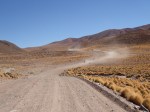
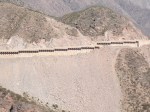
Here are photos of the sketchy rutted dirt north of San Antonio – the newly engineered and beautiful crossing from Nonogasta – the wind swept tarmac almost at the southern end near Esperanza.

Not the wild road it used to be but still an epic way to see the country.

Not All Moments Go Into A Camera.

Tierra Del Fuego is not quite done with us yet.

Chris and I left Ushuaia a day early to try and get a jump on the wind and the distance and the ferry crossing to Punta Arenas from where we are shipping our bikes home. We left in the rain, dodged a couple of storm cells and ended up at the Chile border crossing just at one of the hours they were not on strike. So onwards across 60 km of road works into the wind passing trucks and their dust. Then 100 km of arrow straight dirt road towards Porvenir where there is a ferry but we had no idea when it sailed.

Finally the road lurched towards the coast and rocked and rolled around the headland. About 80 km of good rocky dirt road that plunged to the beaches then up the cliffs past remote houses with ancient boats pulled up; in and out of bright sun, in high winds, rain, hail, and sleet. Our Freezing Temps lights flashed. The wind and cold were uncomfortable and occasionally terrifying. We found the ferry tied up waiting for the 8:00am sailing, found a hotel, clean sheets, pisco sours, and Carménère red wine. WE HAD A BLAST.

Today the day broke bright and very windy and, as a result, the ferry was “suspendido indefinidamente” so we set off to the other ferry crossing that was supposedly working. We rode across the adjacent nature reserve chasing farm animals and wild guanacos and scared up flocks of wildfowl and sea birds. The sun on our faces and the wind at our backs until we got to the ferry dock and the wind was blowing even harder and the ferry was, of course,  “suspendido indefinidamente”

Two fantastic rides and not a single photograph was possible to record either of them. They will just have to stay etched in my cerebral cortex instead of into Instagram. Old school.

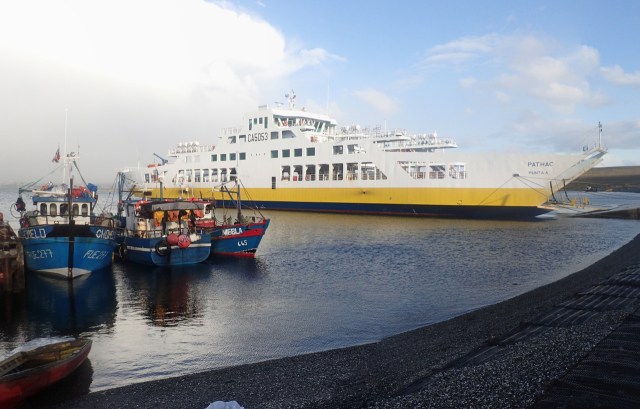
The ferry was not going anywhere so that’s one photo I could take. Here it was tied up in the calm of evening and, as far as I know, it is still there.