Expedition65 – 65 Degrees of Latitude in 65 Days

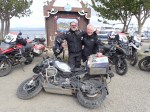
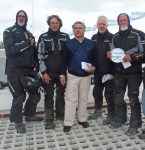
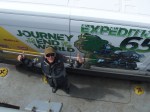
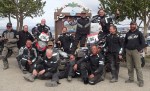
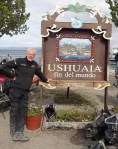
Just as we cruised down into Ushuaia, my odometer clicked across 10,000 miles and we completed 65 degrees of latitude from Cartagena, Colombia to Ushuaia, Argentina.

We missed our one injured member, Jason Houle, and the two who had to make their own way home, Bill Whitacre and Chris White.

What a journey.

Good War or Bad War. Honour Those Who Served Regardless

My father served in a bad war. He was conscripted in 1943 and joined the Army Corps of Signals and then volunteered to join the relatively new Airborne Division. After training he missed the action in Europe and was sent to Palestine as part of the British Mandate and served as a Red Beret until he was demobilized, and the State of Israel was declared, in 1948. His contemporaries returned home to a hero’s welcome after the defeat of Germany; he returned unheralded after a perceived defeat in Palestine and was never the same afterwards.

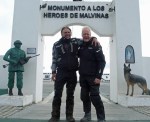
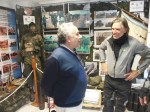
Many who fought for Argentina in the Falklands War must have felt the same way. Today we visited the Monumento A Los Heroes De Malvinas in the naval town of Rio Grande in Tierra Del Fuego, Argentina. As we stopped for photographs in the cold cutting gale, we were greeted by Jose Salas who is one of 120 Malvinas veterans who maintain a vigil at the monument to honour their fallen and their veterans of this needless conflict. There is one link in the chain around this monument for every one of the 648 Argentinian dead.

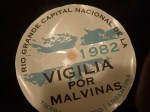
He handed us stickers and then led us to the museum that is self funded by the veterans in town so that the fallen are not forgotten. We discussed his experience and that of my Dad and he was very careful to point out that the monument and museum are not there to point blame at the British but to remember their old friends.

I started the day joking with my Argentinian traveling companion, Pablo Vadillo, but could not talk to this man without a lump in my throat and a tear in my eye thinking about my own father and his war time experience.

Magellan and Patagonia

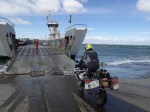
Now we have completed the final leg of our journey across the Straits of Magellan from Patagonia to Tierra de Fuego and back into Argentina. Almost to Ushuaia.

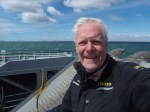
Today this is a very fast, friendly, and professional ferry trip across the narrow strait. Though it is definitely a challenge to ride a big bike onto the ferry across the surf and off again in a howling cross wind that is normal here. Commit or get wet.

The first European to explore this area was Ferdinand Magellan; a Portuguese navigator working for the Spanish king to find a back door to Asia. He was the first to circumnavigate the globe in 1521 and found this protected passage around the cape that now bears his name.

Magellan also named Patagonia. There are a few different accounts of how Patagonia got its name but the most plausible etymology is the simplest. Magellan was a fan of a popular Spanish chivalry novel by Francisco Vasquez whose title character, Patagon, was a savage giant. Shakespeare also stole characters from this book that showed up in The Tempest.

When Magellan’s crew met the native Tehuelche indians they found they were quite a bit taller than the Europeans and, like all sailors stories about women, and storms, and monsters that get exaggerated in the telling, they were subsequently described as giants and called Patagons.

Around this time the Spanish Conquistadors were starting their conquest of the continent from the east and the north but they never, not in the 300 years of Spanish rule of South America, bothered to conquer Patagonia; there was no gold to mine, no civilizations to plunder, and it is damned cold and windy. So they never bothered. It was left to the newly independent Chile and Argentina to subject the Mapuche and Tehuelche indians in the 1830s. Eventually the Mapuche from the west overran the Tehuelche in the east and now they are all but decimated as a people.

The original Patagons no longer exist in Patagonia.

Bike Brotherhood

Waiting at the ferry crossing today across the Straits of Magellan to Tierra del Fuego everyone wanted to chat about the bikes and where we were going. One truck driver in particular asked us about our ages and joked that this trip was a big effort for guys our age.

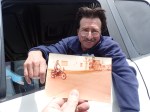
We shook hands and introduced ourselves. So I had a chance to meet Daniel who was driving the big white Scania. I asked him his age and he said 54 and I told him that the three guys he was talking to were 6, 10, and 13 years older and still having a blast riding the length of the continent on big adventure bikes.

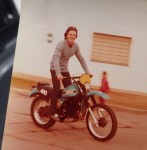
He then produced a couple of faded pictures from an photo album in the cab that showed him 36 years ago riding a custom Yamaha 400 2-stroke that he claimed he used to wheelie a 100 yards at a time.

Apparently his biking days are over but he had a huge glint in his eye when he had a chance to relive those days with others who truly understood his exhilaration.

Torres Del Paine – Geology and Hospitality

We crossed into Chile with high expectations and no reservations in the Torres del Paine National Park. The hostels were either closed or full, the famous hotels and lodges are crazily expensive, and the rain was rolling all over us. After a couple of phone calls, we found Hotel Tres Pasos that was not supposed to open for another week but, after sweet talking the staff and then the owner who drove 40 Km to talk to us, they opened the place just for us, threw more logs on the fire, opened the bar, and cooked us a stupendous salmon and steak dinner. The warmest possible welcome for a group of cold and dripping and tired riders.

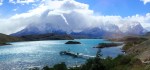
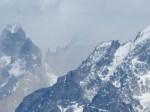
The following morning, we brushed the new snow off our bikes and headed to the park to soak up the scenery. Spectacular doesn’t even come close. The mountains here are the result of sedimentary and granite layers being pushed up and eroded by glaciers and wind and ice and time; leaving a characteristic jagged landscape. Here you can see the Torres de Paine (Blue Towers) behind the Laguna Amara and the view of the Cuernos de Paine across Lake Pehoe from the Explora Lodge.

Nalca – Jurassic Rhubarb

Riding the Carretera Austral in southern Chile seems strangely familiar to those of us who live at the same latitude north of the Equator. The temperatures and constant rain and colors and smells and plants are what we would expect to see at 45 degrees near the Pacific; all the pines, invasive yellow Scotch Broom, ferns, and flowering lupins.

But one plant stands out as unique.

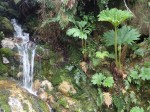
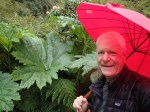
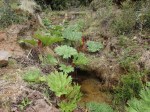
Nalca, known as Chilean rhubarb though it is not related to rhubarb, is unique to this area and is everywhere here. It is a prehistoric plant that evolved 150 million years ago in the late Jurassic so would have been familiar to the dinosaurs and Fred Flintstone, is adapted to the poor soil, and its size means it shades out any competition. It is crammed with nutritional goodness and the young shoots are eaten here peeled and dipped in salt or made into jams.

Meteorology and Bureaucracy

The Andes control everything in South America – trade, travel, national identity, industry, history, religion, and most importantly, the climate.

In the northern half of the continent, the winds blow from the east and pickup megatons of warm Atlantic water that is blocked by the Andes. This creates Amazonia on one side and the Atacama Desert on the other; the world’s wettest and driest places right next to each other. In the southern half, the winds blow from the opposite direction from the west over the cold Pacific and even colder Humboldt Current. The winds pick up cold water which the Andes have been trapping for eons to make the glaciers, fjords, and forests in southern Chile. This leaves nothing left over for Argentina but the Patagonian wind.

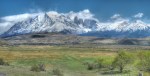
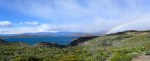
When we crossed from Chile to Argentina, west to east, the wind was howling. Here is Lake General Carrera that spans the border with the permanent snow, rain, and rainbows rolling over the mountains in the west and leaving cloudless skies and gales in the east. The plants in Chile are pines, ferns, and grass with cattle grazing. In Argentina, any plant that ever stuck its head up over a few inches has been clipped by the wind and the process of natural selection in this hostile desert ecosystem. The animals we saw were hares, guanacos, and armadillos.

Rain forest to desert in half an hour over the hill.

Bureaucracy.

Most of the time the border crossings between Chile and Argentina are well organized and co-located; both nations working together to make the crossing as easy as possible for their citizens, but often the posts are miles apart. On this crossing we all managed to miss the Chile Carabinieri post in town and rode 25 km on a treacherous road that was either dirt or crazy patio paving in 90 kilometer per hour winds – only to be told to go back and get our passports stamped on the other side. Both sides were still in the duplicates-with-carbon-paper era and this was not a rapid process.

So we got to stop and admire this view three times. Life has its compensations.

The Carretera Austral

Southern Chile is huge and beautiful and rugged and difficult with a small number of remote communities scattered in the steep mountains and forest and fjords.

Construction of the Carretera Austral (Southern Highway) was started in 1976 under the dictatorship of Augusto Pinochet to try and connect this complex part of the country without the need to go over to Argentina and back again. Starting at Puerto Montt and running 800 miles south, the road wasn’t completed until the final section to Villa O’Higgins in 2000 and, even now, only connects about 100,000 people. This area is almost uninhabited.

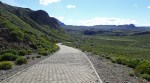
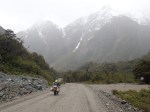
We got a chance to ride a small part of the road as we dropped into Puyuhuapi and then down to Cerro Castillo close to Lake General Carrera. The ride through the mountains and glacial valleys and along the fjords is truly spectacular with the road switching from impeccable sweeping tarmac to crushed rock with potholes – dust was not a problem in this wet and cold season but the rain clouds robbed us of some of the most spectacular views.

The Mimosa – The Welsh Mayflower

Somewhere my Evans ancestry goes back to Wales so maybe I am related to the Welsh community here in Argentina.

The Welsh in Argentina? What? How did that happen?

In the early 1800s the coal, slate, iron, and steel from Wales were fueling the industrial revolution and many thought that the rural life and the Welsh language and culture were in danger of being absorbed and smothered by England. So, looking for places to continue their traditions, may Welsh people took off to other parts of the world. They tried New York and Pennsylvania but the forces of absorption there were too strong.

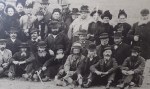
In the 1861, the Argentinean government gave them a tract of land in Patagonia and 200 souls departed Liverpool for Argentina about the tea clipper Mimosa – the Welsh Mayflower escaping the English influence on their language, faith, and culture like the Pilgrims before them. The photo of the passengers on this trip shows them as a dour and determined group, well past their youth; not a lot of laughs on this voyage.

They originally settled on the coast and learned to tame the unforgiving pampas with irrigation but the community eventually spread all the way west to the Andes. Here in Trevelin, John Evans built a town based on wheat and flour milling until Juan Peron decided the area was not appropriate for wheat and shifted farming to cattle ranching – I suppose dictators can do that.

Earlier, the influence of the Welsh was significant enough that, in 1902 along with the indigenous Mapuche, they managed to insist on a change to the Chile-Argentina border to prevent their community being split between two countries.

Today there are perhaps 50,000 Welsh speakers here in Chubut Province and they hold four annual Eisteddfod festivals which are Gaelic gatherings for dance, music, and poetry in the Welsh language.

It is hard to reconcile the photo of the Mimosa passengers with a group of people whose motivation was to escape the English in order to be able to dress as druids to sing, dance, and recite poetry.
Forget What They Say About Wind In Patagonia

It gets much worse.

The winds in Patagonia are legendary. There is simply not enough land mass in the narrow point of South America to slow the “Roaring Forties” winds at these latitudes. These winds are stronger than the same winds in the northern hemisphere because they have been blowing over water with no interruption for so long and so far. This is the most southerly bit of land that dares to poke out into these winds.

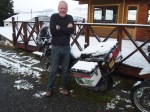
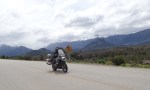
There is normally a constant 25 mph wind blowing but riding along this part of Ruta40 was completely insane when the local weather service reported sustained 75 mph winds. When there was a road surface like tarmac or solid rock with some grip, it was feasible to lean the bike but when there was fresh gravel it was totally impossible to resist the sideways force – you cannot lean the bike far enough without losing all sideways grip. All of us went down or got knocked off the road. If you parked your bike with the side stand upwind, it was knocked over by the wind instantly.

Everyone seemed to invent their own technique for dealing with this – let the bike drift and then lurch upwind periodically, lean way off to windward to keep the bike vertical, go fast enough that the wheels  gave more gyroscopic help – but the physics won every time. These are big bikes and there is no way to curl up small enough to resist the force.

At one point our little group reached the end of tiny section of pavement with nothing but loose gravel all the way to the horizon and the wind directly across the road. We could not even stand let alone ride. Long story short, we left the bikes to the wind and hunkered down behind a small berm with yesterday’s sandwiches to see if the wind would die down. Four hours later, it had moderated a fraction and we took off again for another attempt and managed to get to tarmac and on to El Calafate.

All in all, about 100 kilometers of this nonsense. A massive shared experience and lifelong learning for all of us. No road will seem difficult after this.

This video is Chris Van Dyke trying to stand up.